Hip Pain After Long Flight: Why It Happens and How to Fix It

Hip pain after a long flight is more common than most people expect. You sit down feeling fine, and by the time you land you can barely stand up straight. The stiffness in your hips, the ache deep in your glutes, the tightness that makes walking through the terminal feel like a chore.
It is not an age thing. It is a pressure thing. And the fix is simpler than most people realise.
What Causes Hip Pain After a Long Flight
Hip pain after a long flight comes from two things happening at the same time: sustained pressure and restricted blood flow.
When you sit on a thin airline seat, your sit bones press into the seat surface with your full body weight. The soft tissue around your hips, glutes, and the sides of your pelvis gets compressed for hours with no relief.
Economy seats also tilt your pelvis slightly backward. This puts your hips into a position where the angle between your torso and thighs is less than 90 degrees. Over a few hours, this position tightens the hip flexors at the front and compresses the piriformis muscle at the back. That is what causes the deep aching sensation that radiates through the hip and into the glute.
Blood flow to the soft tissue gets cut off under sustained pressure. Once circulation is restricted for long enough, you land with that burning, stiff, almost bruised feeling in the hips that takes hours or even a full day to resolve.
Why Most Solutions Do Not Work
Most travellers try to fix hip pain after a long flight by booking an aisle seat, stretching before they board, or getting up to walk every hour. These all help at the margins. But none of them fix the root cause.
The root cause is the surface you are sitting on. Economy seat padding compresses within the first hour. After that you are essentially sitting on hard plastic with nothing between your hip tissue and the seat base.
Stretching between flights helps recovery. It does not prevent the pressure from building during the flight. You can walk the aisle every 30 minutes and still land with sore hips if the seat is putting concentrated pressure on the same points the entire time you are seated.
The only way to prevent hip pain on a long flight is to change the pressure profile of the surface you are sitting on.
How to Actually Prevent Hip Pain on Long Flights
Use an air cell seat cushion
This is the most effective single change you can make. A proper air cell cushion spreads your weight across dozens of independent cells instead of letting it concentrate on two small points. Your hip tissue never takes the full load and blood flow stays consistent throughout the flight.
Foam cushions do not work for this. They compress under your weight and stop helping within the first two hours. You need independent air cells that each move with your body as you shift position.
Sit with your hips slightly higher than your knees
Most economy seats position your knees at the same height or higher than your hips. This increases the angle of hip flexion and tightens the muscles around the joint. A seat cushion with a slight forward tilt corrects this and takes pressure off the front of the hip.
Move every 45 minutes
Getting up and walking is useful for circulation. Even standing at your seat for 60 seconds and doing a gentle hip circle can reset the pressure distribution on the soft tissue. The goal is to interrupt the sustained compression before it causes lasting discomfort.
Avoid crossing your legs
Crossing one leg over the other restricts blood flow through the hip on the bottom side and puts the opposite hip into external rotation. On a short flight this is harmless. Over several hours it adds to the load on muscles that are already under stress.
The Role of the Seat Surface in Hip Pain Relief
When researchers use thermal imaging to look at pressure distribution on airline seats, the results are consistent. A standard economy seat creates two intense hotspots directly under the sit bones. Everything around those two points is relatively unloaded.
That concentration of pressure is what damages the soft tissue over time. Your hip flexors, glutes, and the bursa around the hip joint all sit in the high-pressure zone during a typical economy flight.
A cushion that redistributes that pressure evenly does not just make the flight more comfortable. It prevents the tissue damage that causes hip pain after a long flight in the first place.
The Travlsoft Air Cushion for Hip Pain on Flights
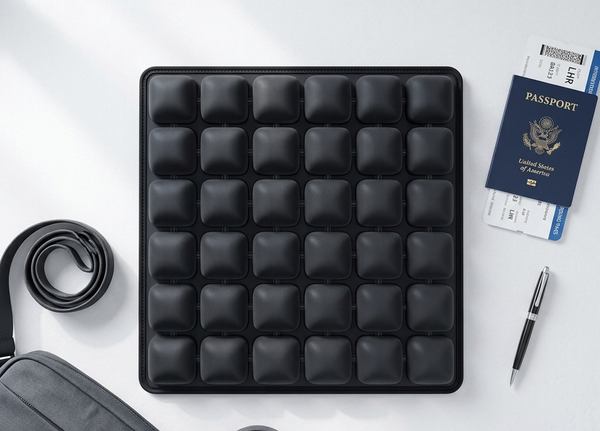
The Travlsoft Air Cushion was built for exactly this problem. It uses 36 individual bionic honeycomb airbags in a 6x6 grid. Each cell moves independently as your body shifts, so the pressure distributes evenly across the full seat surface and your hip tissue never takes concentrated load.
Independent testing using thermal imaging showed 54% less peak pressure compared to a standard airline seat. Average pressure across the seat dropped by 41%. The difference in how your hips feel after a 10-hour flight is significant.
It inflates in seconds with the built-in pump. No mouth inflation needed. Firmness is adjustable so you can dial in the right support level for your body. It holds pressure for 12 or more hours without needing a top-up. When the flight is over it deflates and folds into a compact carry bag the size of a water bottle.
12,000 verified buyers rate it 4.9 out of 5 stars.
The Travlsoft Air Cushion is $69 with a 60-night trial and free returns. Try it at travlsoft.com
Frequently Asked Questions About Hip Pain After Long Flights
Why do my hips hurt so much after flying?
Economy airline seats create concentrated pressure on your sit bones and the surrounding hip tissue for hours at a time. Once the thin seat padding compresses, that pressure goes directly into your soft tissue. The result is the aching, stiff, sore feeling in the hips and glutes that you notice after landing.
How long does hip pain last after a long flight?
Mild hip pain after a long flight usually eases within 12 to 24 hours with rest and gentle movement. If you fly frequently and the pain is building up over time, the cushion you sit on during the flight is the variable to change.
Does a seat cushion help hip pain on flights?
The right kind does. A foam or gel cushion compresses and stops helping within a couple of hours. An air cell cushion with multiple independent chambers keeps redistributing pressure throughout the full flight and prevents the buildup that causes hip pain in the first place.
Is hip pain after flying serious?
For most people it is a soft tissue issue that resolves with rest. If the pain is sharp, radiates down your leg, or does not improve within a day or two, it is worth speaking to a doctor as it may indicate nerve involvement or an underlying hip condition.
Can I fly with hip pain?
Yes. Using a proper air cell seat cushion, booking an aisle seat for easier movement, and getting up to walk every 45 minutes are the three most effective steps you can take to manage hip pain during a long flight.
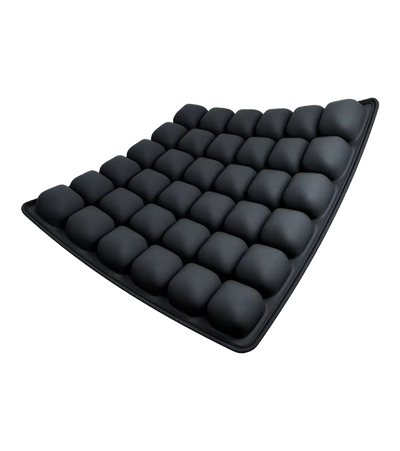
The Travlsoft Cushion
Hard airplane seats destroy your back before you even land. The Travlsoft Air Cushion changes tha...